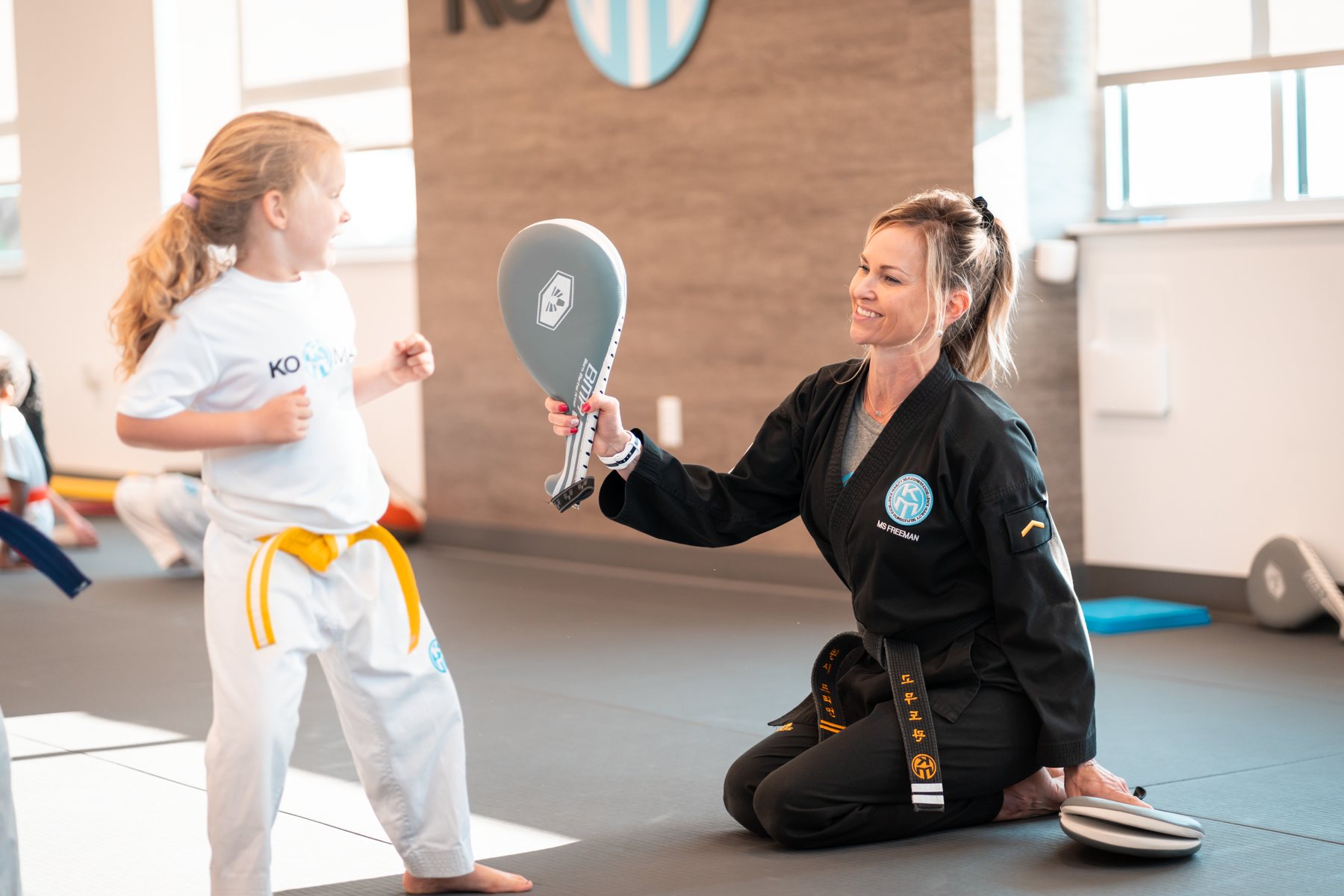
Focus is a skill your child can build, the same way they build strength or reading. It grows when adults teach it in small steps, give one instruction at a time and notice progress, instead of telling a child to "just focus."
"Just focus." Most of us have said it to our kids. Most of us heard it growing up. For a child whose brain notices everything at once, it helps about as much as telling a child who can't swim to just float.
This month I spoke at the ADHDKC Parent Group about something I've seen over 20 years of teaching: focus is not something a child either has or doesn't have. It is a skill. It can be taught, practiced and built. Many of the children in our classes have ADHD, autism or another learning style, and the ones who grow the most have adults who stop demanding focus and start teaching it.
Here are seven ways to do that at home.
1. Set the goal one step past where they are
A goal that is too big tells a child they have already failed. A goal that is too easy teaches nothing. Aim for one small step beyond what your child can do today. In class that might mean holding a stance for ten seconds when they can hold it for seven. At home it might mean reading for twelve minutes instead of ten. When they reach it, move the line one more step.
2. Give one instruction at a time
"Go upstairs, brush your teeth, put on your pajamas and pick out a book" is four tasks. For many kids, only the first one lands. Give one, wait until it's done, then give the next. Our instructors teach the same way: one instruction, watch it happen, then add the next. It feels slower. It's faster than repeating the whole list three times.
3. Redirect energy instead of shutting it down
A child who can't sit still usually doesn't need to be told to stop moving. They need somewhere for the movement to go. Give the energy a job: carry in the groceries, do ten jumping jacks before homework, stand at the counter while they read. Kids focus better after they move, not instead of moving.
4. Ask instead of tell, and offer choices
Children push back on orders and lean into decisions. "Do you want to start with math or spelling?" gets a different response than "Do your homework." Two good choices give your child a sense of control, and a child who chose the task is more likely to stay with it.
5. Notice progress out loud
Kids with attention challenges hear a lot of correction. Balance it by catching what goes right, and be specific. "You stayed with that worksheet the whole time, even when your brother came in" teaches far more than "good job." What gets noticed gets repeated.
6. Let them struggle, safely
It's hard to watch a child get frustrated. But a child who is rescued every time never learns to push through. Let them stay with a hard thing a little longer than feels comfortable, while you stay close. In class, a student may miss a board break several times before it finally breaks. That moment means something because they had room to struggle first.
7. Stay calm first
Children borrow our calm. When our voice rises, theirs rises with it. When we slow down and lower our tone, they have something steady to match. Before you correct, take one breath. Your calm is the first tool your child has for finding their own.
What to look for in an activity
Parents at the group also asked how to choose sports and activities for a child with ADHD. A few things to look for:
- Small groups, so your child is seen and not lost in the crowd.
- Clear structure, with the same routine each class and instructions given one at a time.
- Coaches who teach focus and self control along with the activity, and who notice effort as well as results.
- Steady, visible progress, like stripes or belts, so your child can see they are getting better.
- A place where struggling is expected and normal, not embarrassing.
That's how we build every KOMA class. If you'd like to see it for yourself, schedule an Intro to KOMA at your nearest studio.
Pick one this week
You don't need all seven at once. Pick one, use it every day this week and watch what changes. Focus is built the same way everything else is: one small step at a time.
For more ideas, download our guide, Raising a Focused Child in a Screen Time World, or read 3 reasons why KOMA Taekwondo is good for ADHD.
This post comes from my talk at the ADHDKC Parent Group on November 10, 2026. Thank you to ADHDKC for having me. You can read their recap of the evening here.
See it on the mat.
The first step is an Intro to KOMA, and it is complimentary. Your child gets on the mat, we see how they move and listen, and together we find out whether this is a fit. For some families it is not, and we will tell you that honestly.
Schedule your Intro
Master Ko founded KOMA in 2006 and has taught for more than 20 years. He writes about commitment, confidence and raising strong children for families across Johnson County.