
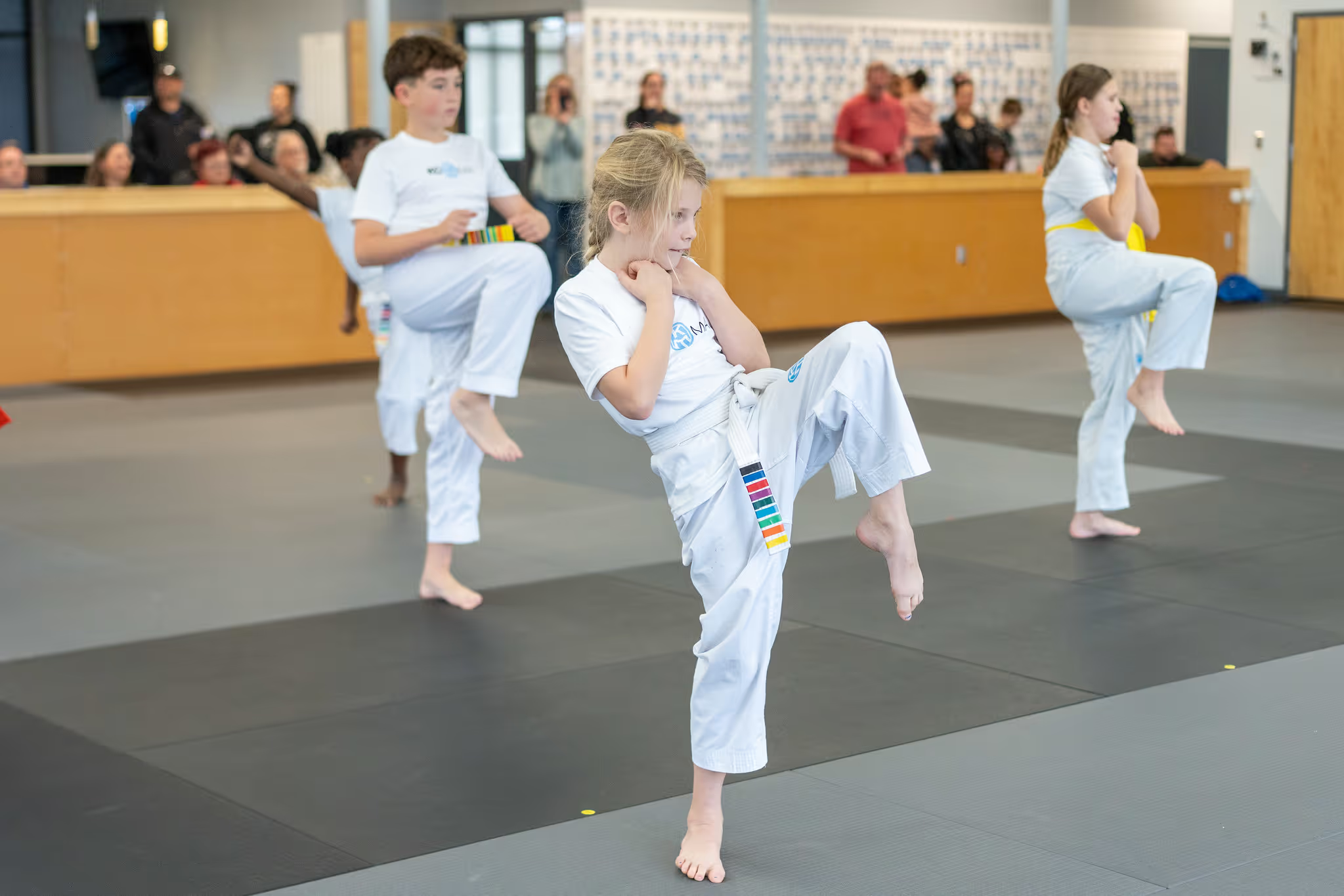
I have taught thousands of children over the past 28 years.
The students who earn black belt, which takes at least three years, almost always follow one of two paths.
- Some love coming to class. They enjoy learning. They take pride in earning stripes and belts.
- Others start out excited, but over time they begin to complain. Their effort drops. Every class becomes a battle at home.
That second path is hard on everyone. The parent. The child. The instructor.
So I began asking a question.
What actually causes a child to “like” something?
John likes going to class.
Mary likes earning her stripes.
James likes KOMA.
But why?
I am not naive. Some children are naturally drawn to certain activities. Maybe it is soccer. Maybe it is piano. Maybe it is martial arts. Nature plays a role.
But we cannot control nature.
We can influence environment.
After almost three decades of teaching, I can confidently say that environment plays a far greater role in long term commitment than natural interest.
If you want your child to stay in martial arts for the long term, here is what matters.
1. Set Expectations Early
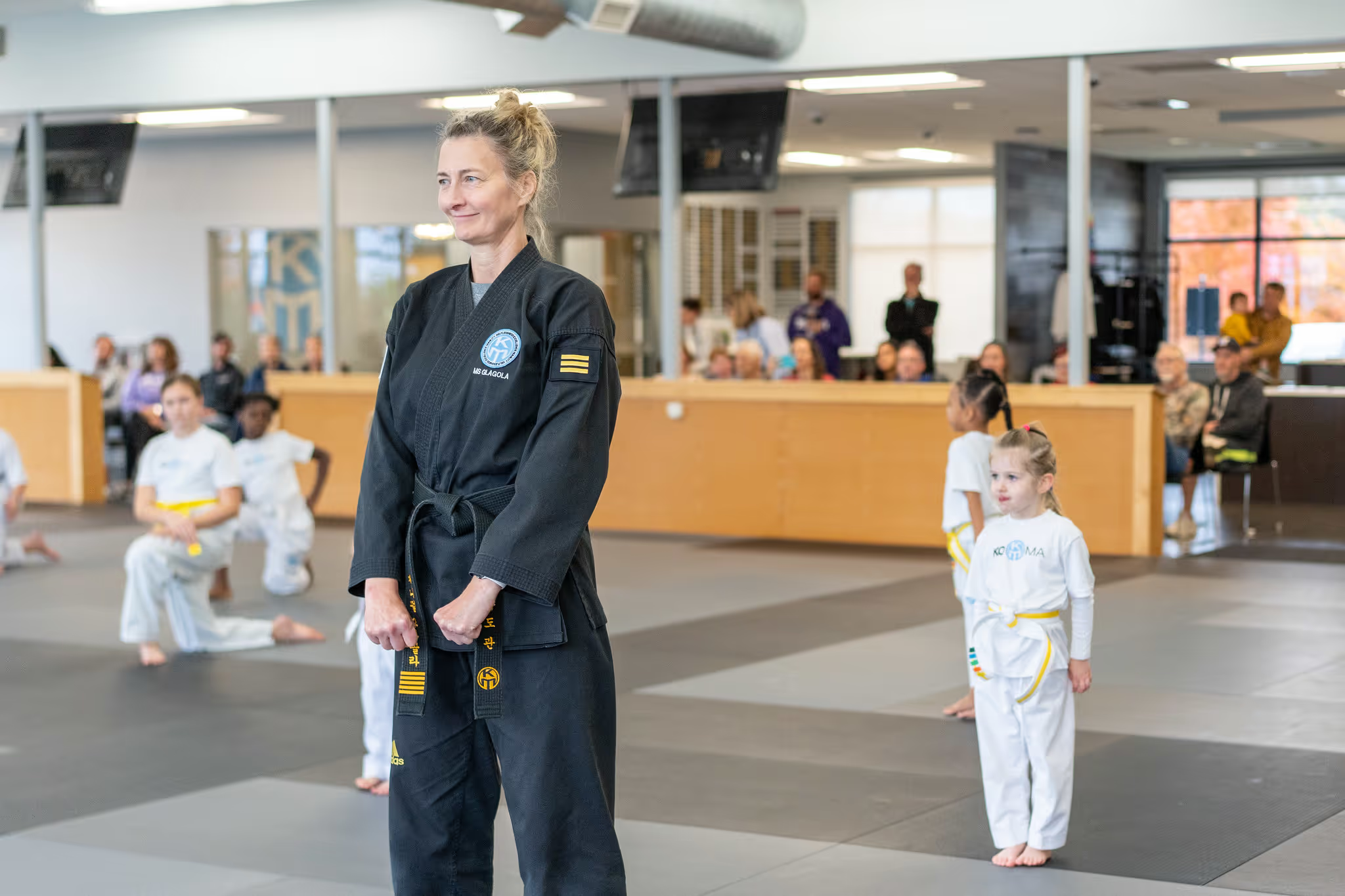
My daughter started classes at KOMA as soon as she turned three.
For two years she cried. She resisted. I had to pry her out of the car and hand her to the instructor three days per week.
Why would I do that?
Because my wife and I believe deeply in what this training builds.
From the beginning, she understood one thing clearly: quitting was not an option.
Some parents may think that sounds extreme. I would ask, is quitting school an option? Of course not. School builds academics. KOMA builds character and foundational life habits.
Children should not be responsible for deciding long term commitments. Parents are.
When expectations are clear from the beginning, children adjust. When quitting is always available, resistance grows. Children feel safest when structure is firm.

2. Keep a Consistent Schedule
For almost ten years, my daughter has attended class on the same days at the same time each week.
Monday. Wednesday. Friday.
If she misses because she is sick or we are out of town, she makes it up.
Consistency builds security.
Children thrive on predictability. When schedules constantly change, anxiety increases. When routines are stable, resistance decreases.
Discipline is not motivation. Discipline is repeating the right habit at the same time every week until it becomes normal.
Parents who stay in shape do not work out randomly when they feel like it. They follow a repeatable schedule.
The same applies to martial arts.
Same days. Same times. Every week.
That is how momentum is built.
3. Arrive Early
There is no such thing as “on time.”
There is early or there is late.
Consistently arriving late quietly undermines confidence, especially in shy or introverted children.
They notice.
They feel rushed. They feel exposed. Their body shifts into stress mode instead of learning mode.
Arriving at least ten minutes early allows a child to breathe, adjust to the environment, and mentally prepare.
It is a small habit with a significant long term impact.

4. Do Not Over Schedule
We are blessed to live in an area with many opportunities for children.
That is a gift. It can also become a burden.
Too many activities create mental overload, anxiety, surface level participation, and mastery in nothing.
Before signing up for something new, ask one question: why?
Most activities fall into one of two categories, entertainment or development.
Both are valuable. But there must be balance.
If every hour of the week is filled, something will suffer. Often it is the activity that requires the most discipline.
Protect your child’s time. Depth produces growth.

5. Stay Involved
When parents first enroll their children, they are highly engaged.
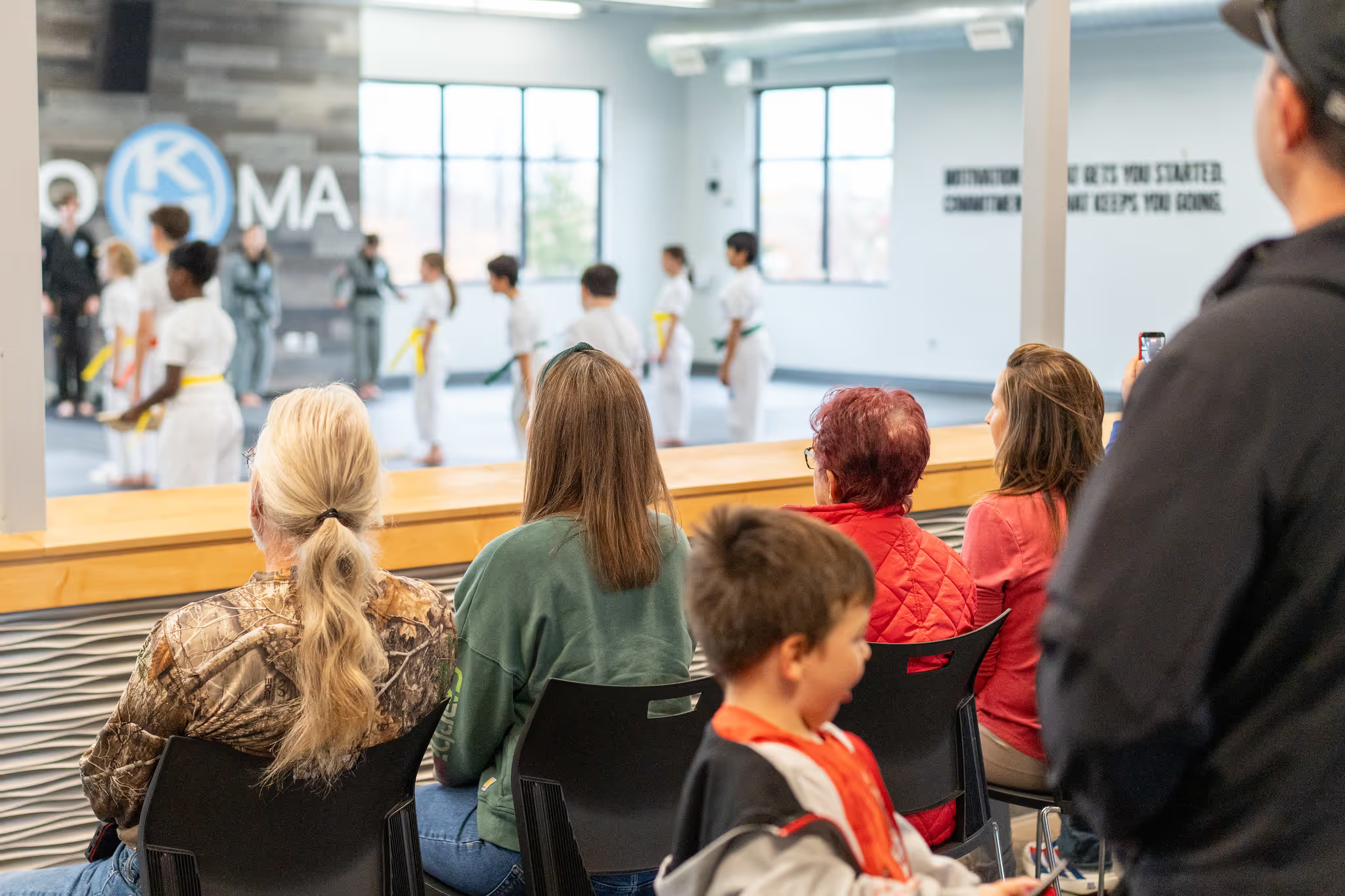
They watch class.
They track stripes.
They attend belt assessments.
Over time, involvement fades.
Drop off replaces presence. Convenience replaces commitment.
Eventually the child says, “I don’t like it anymore.”
Why would they care if the parent no longer appears to care?
Children mirror parental engagement.
This is especially true with older students. Just because they are capable does not mean they do not need your presence.
You do not need to micromanage. But you should occasionally watch class, attend assessments, acknowledge progress, and ask thoughtful questions.
If you stay invested, they are more likely to stay invested.
6. Praise Effort More Than Outcome
Every child desires recognition, especially from their parents.
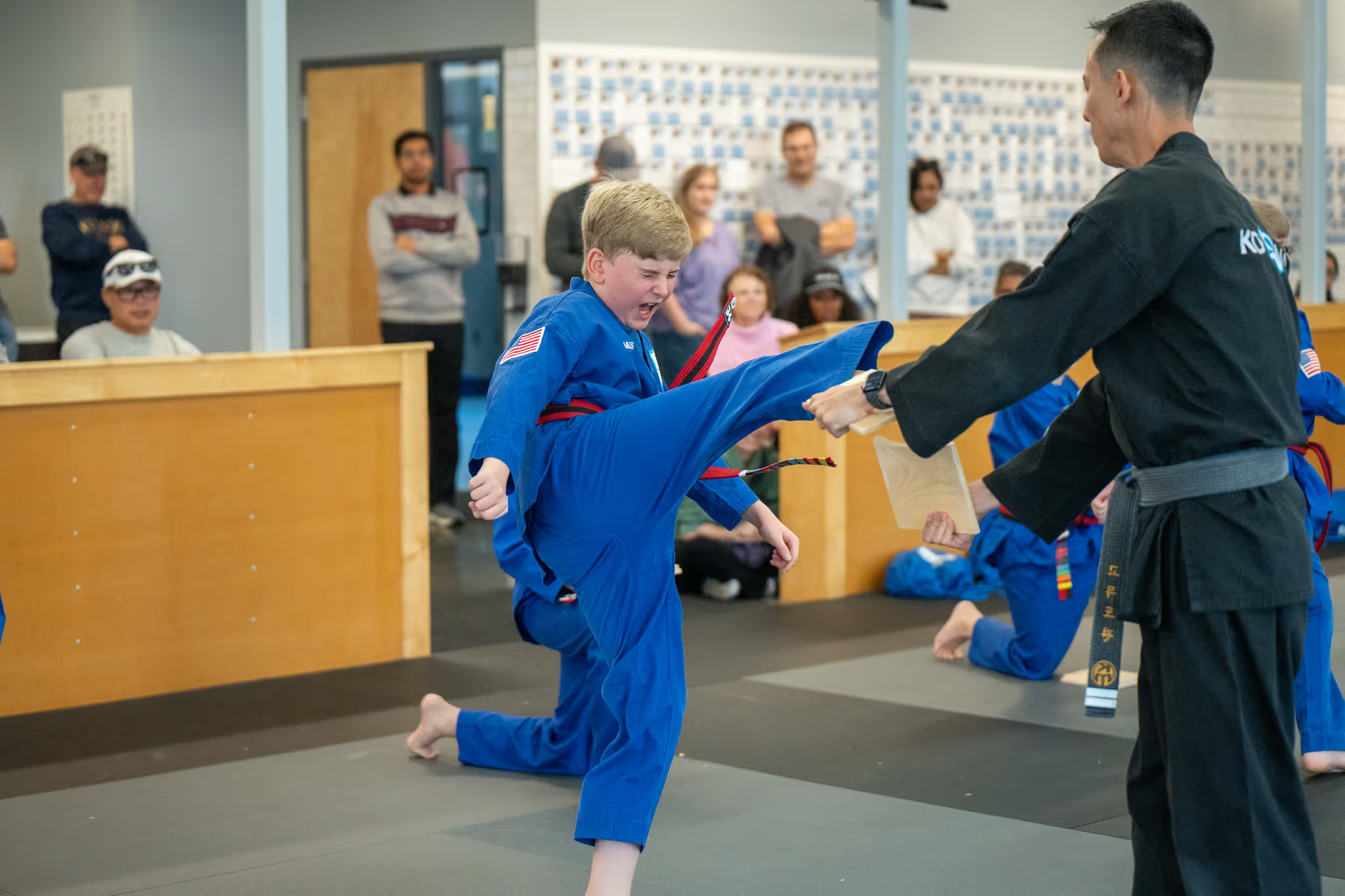
When your child earns a stripe, acknowledge it.
When they push through a hard class, acknowledge that even more.
Belts remain in the studio. Work ethic follows them into adulthood.
If praise disappears, motivation often fades with it.
When consistent effort is recognized, resilience grows.
Final Thought
Children do not “like” something by accident.
They grow to like what becomes structured, predictable, supported, and valued.
If you want your child to stay for the long term, focus less on whether they feel like going today and more on the environment surrounding the commitment.
Interest grows inside structure.
That has been my observation after 28 years and thousands of students. And I have seen it proven again and again.